

Article · part of a guide
Terraform Registry: Public vs Private Module Registries Explained
A Terraform Private Module registry: the secure, internal source of truth for all your organization specific Terraform configurations

Key takeaways
- A private module registry is an organization-owned catalog of pre-vetted Terraform and OpenTofu modules. Consumers reference a logical name like account.scalr.io/org/vpc/aws instead of a Git URL, so you can move the source repository without breaking every consuming configuration.
- Registries enforce SemVer: consumers pin a version constraint such as ~> 1.2.0 and pull patches and bug fixes without inheriting breaking changes.
- The options fall into three groups: managed platforms (Scalr, HCP Terraform, GitLab), purpose-built self-hosted projects (Terrakube), and any registry that implements the Terraform Module Registry Protocol.
- The most common operational problem is authentication, not setup: a 401 looking up module versions during init or plan, or a 403 when a service account pulls a private module, usually traces to a token scoped at the wrong level (account vs environment).
- On Scalr the private module registry is a core feature on the free tier (free up to 50 runs per month) for both Terraform and OpenTofu, auto-synced from VCS when a release is tagged with SemVer.
If you run Terraform or OpenTofu at scale, you’ve probably hit inconsistent code, security gaps, and teams rebuilding the same module over and over. The public Terraform Registry is great for third-party providers, but leaning on it, or worse, pointing your configs straight at specific Git branches, leaves your internal code inconsistent and hard to govern.
A Terraform Private Module Registry fixes that. It’s the secure, internal source of truth for all your pre-vetted, organization-specific Terraform configurations.
What is a Terraform Private Module Registry?
A Private Module Registry is an organization-owned, centralized repository dedicated to storing, sharing, and managing Terraform modules.
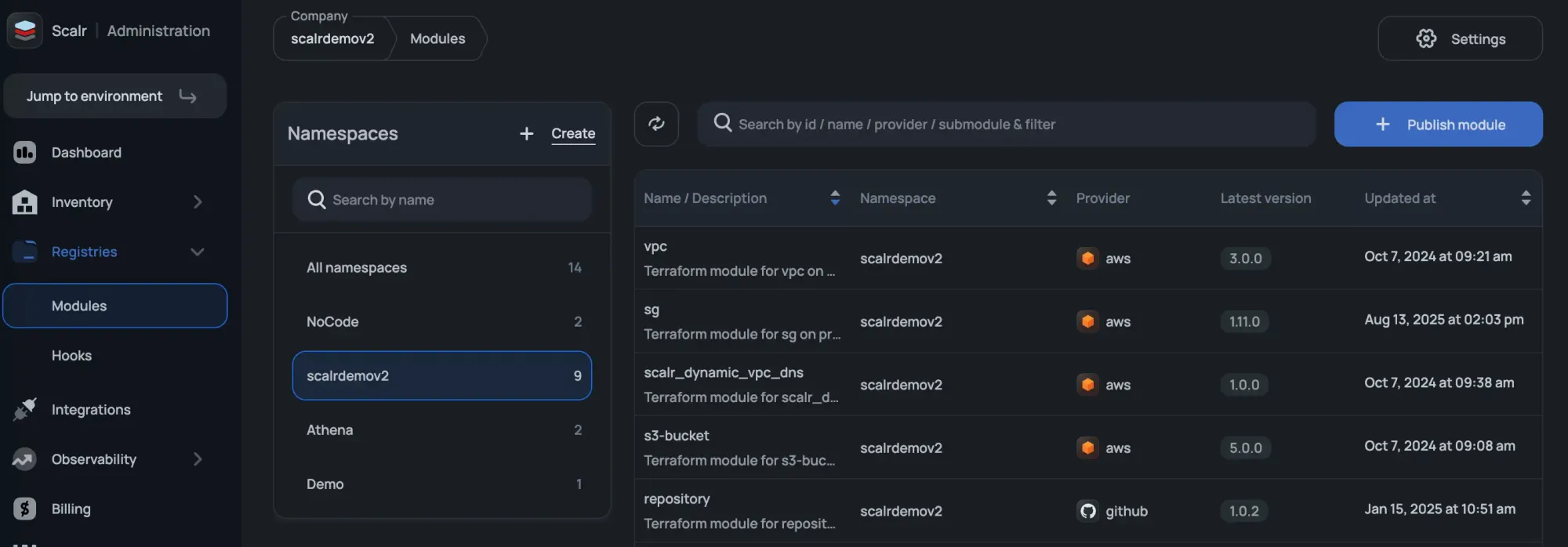
It differs from the Public Registry in purpose and audience:
| Feature | Public Registry | Private Module Registry |
|---|---|---|
| Audience | Global community, public consumption | Internal organization, restricted access |
| Content | Third-party providers, generic modules | Proprietary, hardened, internal modules |
| Governance | Community/HashiCorp Vetting | Organization enforced security & compliance |
The main thing stored in this registry is a Private Module. These are the reusable configurations your Platform or DevOps teams build, like a "Standard VPC with enforced tagging" or a "Hardened RDS Database instance" that applies corporate compliance rules for you.
The Core Benefits of Going Private
A private registry takes module management from an ad hoc process and makes it a proper platform engineering function. It brings five main benefits:
1. Enhanced Security & Compliance
The private module registry makes the "golden image" approach possible. Platform teams vet a module for security and compliance once. After it’s approved and published, application teams consume this pre-hardened infrastructure, so security standards are met by default. Your proprietary or sensitive configuration logic stays inside the corporate boundary and never hits the public internet.
2. Standardization and Consistency (The "Golden Path")
Configuration drift wrecks stability. When every team uses the same module for core infrastructure, like networking or IAM roles, you get consistency across all your environments and projects. Operations get simpler, and debugging and audits take less time.
3. Improved Developer Experience and Discoverability
Think of it as an "App Store" for infrastructure. The private module registry gives you one searchable catalog where engineers can browse, filter, and find pre-vetted components. And since registries usually auto-generate documentation from your module's README.md, developers spend less time hunting for the right code.
4. Simplified Dependency Management
Pointing straight at Git repos usually means pinning to a specific commit SHA, which makes upgrades a pain. The registry supports full Semantic Versioning (SemVer). Consumers can use version constraints (e.g., version = "~> 1.2.0") to pull in bug fixes automatically without risking breaking changes, so there’s a lot less to maintain.
5. Decoupling Consumer from Source
When you consume a module via Git, the consumer’s code is tied to where the repo lives. Move the module repository and every consuming configuration breaks. With the private module registry, consumers reference a logical name (e.g., account.scalr.io/org/vpc/aws) instead. The registry sits in between as an abstraction layer, so you can reorganize your backend storage without touching thousands of consuming configurations.
How to Set Up a Private Module Registry
There are two ways to set up a private module registry: a managed solution or a self-hosted one.
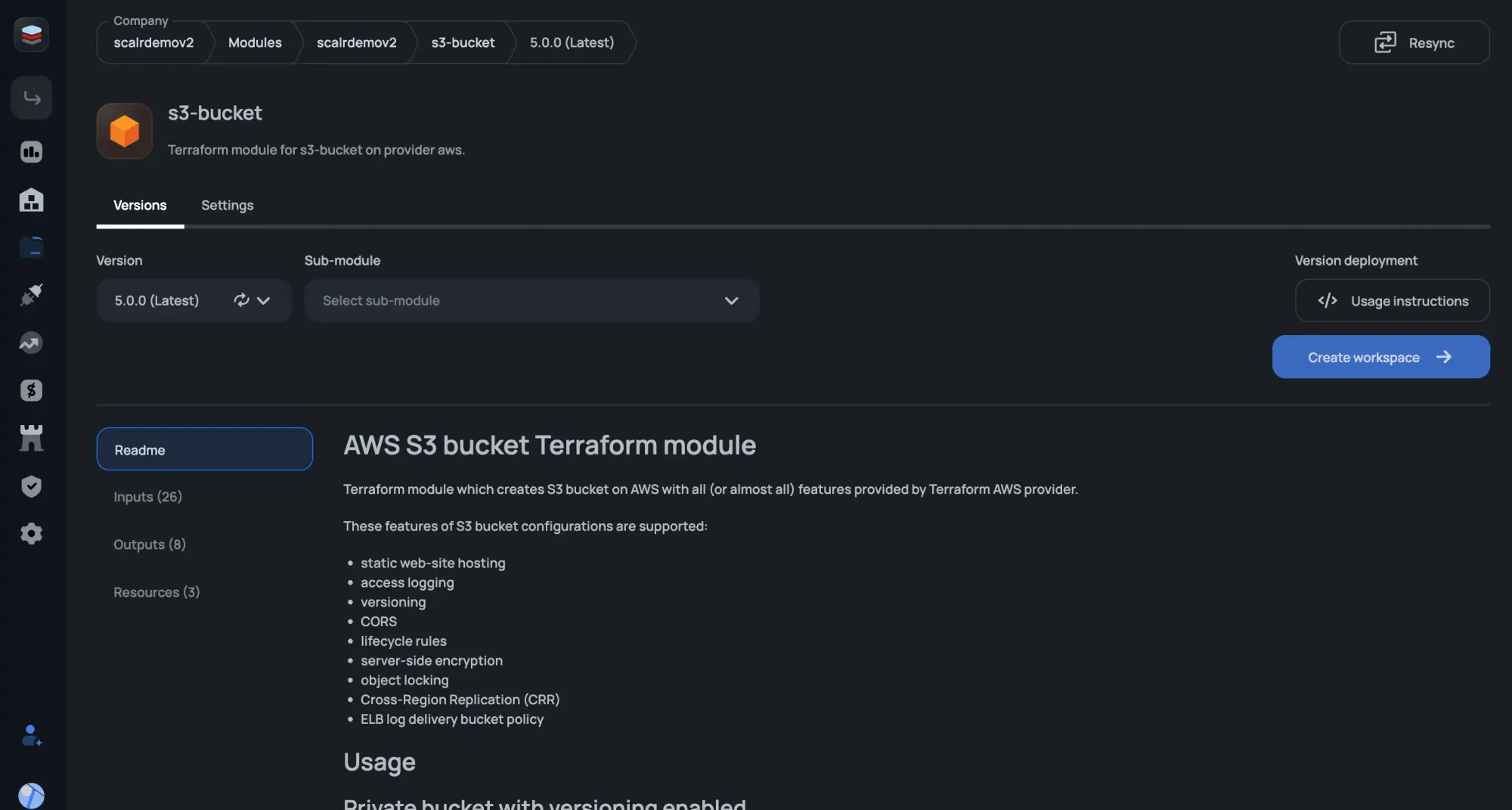
Option 1: Managed Solution (Recommended for Enterprise)
The easiest and most common path is to use a platform with a built-in private registry. These handle native VCS integration and the API protocol Terraform expects, so you don’t have to. The main native options:
- Scalr: An Infrastructure as Code management platform with a built-in private registry. It automatically syncs private modules from your VCS (GitHub, GitLab, etc.) when your Platform team tags a release with SemVer (e.g.,
v1.2.3). Scalr also supports customization, policy enforcement (OPA), and self-service provisioning. The registry is a core feature included on the free tier, free up to 50 runs a month, and Scalr supports both Terraform and OpenTofu. - Terraform Cloud / HCP Terraform: It automatically syncs private modules from your VCS (GitHub, GitLab, etc.) when your Platform team tags a release with SemVer (e.g.,
v1.2.3). It offers zero infrastructure to manage and integrates with role-based access control and workspace execution. This is included on their free tier (though HCP Terraform's free tier is being discontinued), and only Terraform is supported. - GitLab: For organizations already using GitLab for their VCS and CI/CD pipelines, GitLab provides a built-in, native Terraform Module Registry. That's convenient because the source code, pipelines, and registry all live in one platform, so the release and discovery process needs no third-party tool. Unlike Scalr and Terraform Cloud, though, GitLab isn't purpose-built for Terraform.
Whichever platform you pick, you get the same thing: no infrastructure to manage, native VCS integration, and authentication and access control in one place.
Option 2: Self-Hosted/Open Source (For Custom Needs)
If you have strict air-gapped requirements or specific compliance needs, there are self-hosted Terraform options. Tools like Terrakube, or anything else that implements the Terraform Module Registry Protocol, mean you set up and maintain the API endpoints and module storage yourself. You get maximum control, but you pay for it with a lot more operational overhead.
Using a Private Module (Code Example)
The best part of a private module registry is how clean and readable the syntax is.
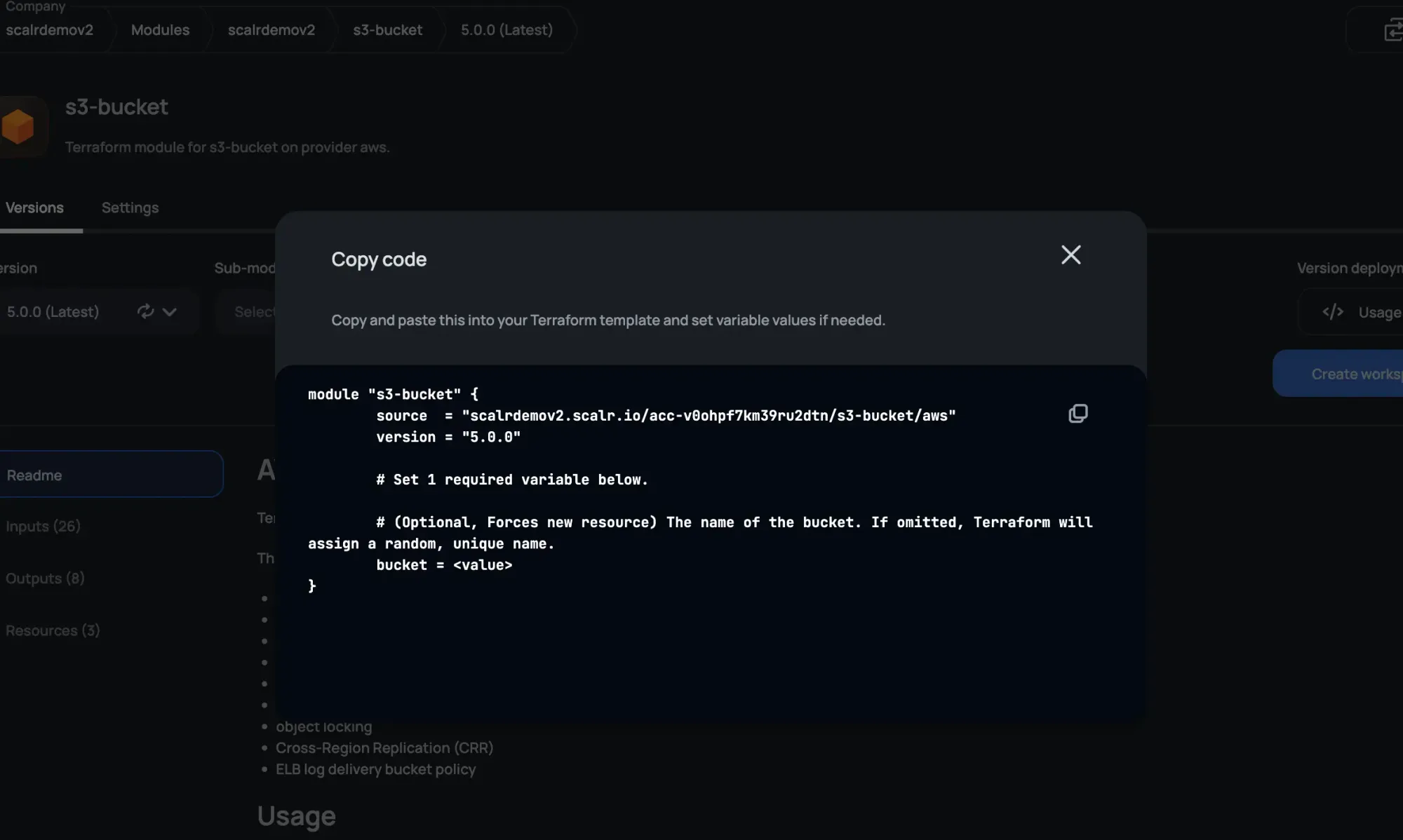
Note the difference between sourcing a public module and a private one from a private registry, here Scalr's:
Public Registry Example:
module "vpc" {
  source  = "terraform-aws-modules/vpc/aws"
  version = "5.0.0"
  # ... variables
}
Private Registry Example (Scalr):
module "standard_vpc" {
  source  = "<account>.scalr.io/<ACCOUNT_NAME>/standard-vpc/aws"
  version = "1.2.3"
  # ... variables
}
Notice the source points to your organization's hostname and namespace, so it’s obvious right away that this is an internal artifact. Authentication runs through terraform login or API tokens configured in your CLI, so developers don’t have to juggle granular VCS credentials.
The errors teams hit at this step are almost always about token scope rather than the registry itself. The recurring pattern in Scalr's support queue is a 401 looking up module versions during init because no registry credential is configured, or a 403 when a service account pulls a private module that was published at a different permission level than the token can reach. If a download fails, check the level at which the module is published against the level the token can read before changing anything else.
Best Practices for Private Module Registry Management
Stick to these practices:
- Mandate SemVer: Enforce strict adherence to Semantic Versioning (
MAJOR.MINOR.PATCH). A change that breaks compatibility must result in a major version bump. - CI/CD Integration is Non-Negotiable: Every module change must undergo automated testing (
terraform testand static analysis) before it is tagged and released to the registry. The registry acts as the final gate. - Implement Producer/Consumer Access Control: Clearly define which Platform Engineering teams have the permission to publish modules and which application teams only have permission to consume them.
- Prioritize Documentation: Ensure every module's repository contains a high-quality
README.mdto feed the registry’s auto-generated documentation feature.
Where to go from here
If you’re bringing your proprietary, hardened modules under platform engineering governance, a private module registry is the next step: vet each module once at the platform level, and consuming teams reference a stable, versioned name instead of chasing Git locations. If you’re still deciding where to run it, see how the leading platforms compare in our guide to selecting a Terraform Cloud alternative.
Scalr's private module registry is a core feature on every plan, free up to 50 runs a month. See pricing or sign up to publish your first module.
This blog has been verified for Terraform and OpenTofu
Frequently asked questions
What is a Terraform private module registry?
A private module registry is an organization-owned, access-controlled catalog of reusable Terraform and OpenTofu modules. It stores pre-vetted internal modules and serves them through the Terraform Module Registry Protocol, so teams consume a versioned logical source (for example account.scalr.io/org/vpc/aws) instead of pointing at a Git branch or commit.
How do I set up a private module registry?
There are two paths. A managed platform (Scalr, HCP Terraform, or GitLab) syncs modules from your VCS automatically when you tag a release with SemVer and handles the registry protocol for you. A self-hosted option such as Terrakube gives you maximum control but requires you to run and maintain the registry API and module storage yourself.
Do I have to use the platform's registry, or can I point to any private repository?
You are not required to use a registry at all. Terraform and OpenTofu can source modules directly from a private Git repository. The registry is opt-in. What it adds is SemVer version resolution, a searchable catalog, and a stable logical source address that decouples consumers from where the code physically lives. On Scalr you can mix both registry modules and direct Git sources in the same configuration.
Why do I get a 401 or 403 error pulling a module from the registry?
Registry authentication errors almost always come down to token scope. A 401 looking up module versions during terraform init or plan usually means no valid credential is configured for the registry host. Set it with terraform login or an API token. A 403 when a service account downloads a private module usually means the token is scoped to the wrong level: check whether the module is published at the account level while the token only has environment-level access, or the reverse.
Is a private module registry free?
It depends on the platform. On Scalr the private module registry is a core feature available on the free tier (free up to 50 runs per month), with no per-user or per-resource charges. HCP Terraform includes a registry too, but its free tier is being discontinued. Self-hosted registries have no license fee but carry the operational cost of running them yourself.
How do I control who can publish modules versus only consume them?
You separate publish from consume with role-based access control. In Scalr you compose custom roles from individual permissions and assign them across account, environment, and workspace scopes. A platform team holds publish rights at the account level, so module versions are governed centrally. An application team gets consume-only access scoped to its own environment, so it can pull modules but not change what the catalog offers. This keeps access least-privilege and lets you onboard more personas safely: a junior who can plan but not apply, a contractor scoped to one workspace, an auditor with read and audit access. Scalr is a drop-in alternative to Terraform Cloud, so the registry and its scopes map directly onto Terraform and OpenTofu module structure.
About the author

director of platform engineering at Scalr
Ryan Fee is the director of platform engineering at Scalr, with over 15 years of experience improving infrastructure experiences at companies large and small.
Part of this guide
13 sheets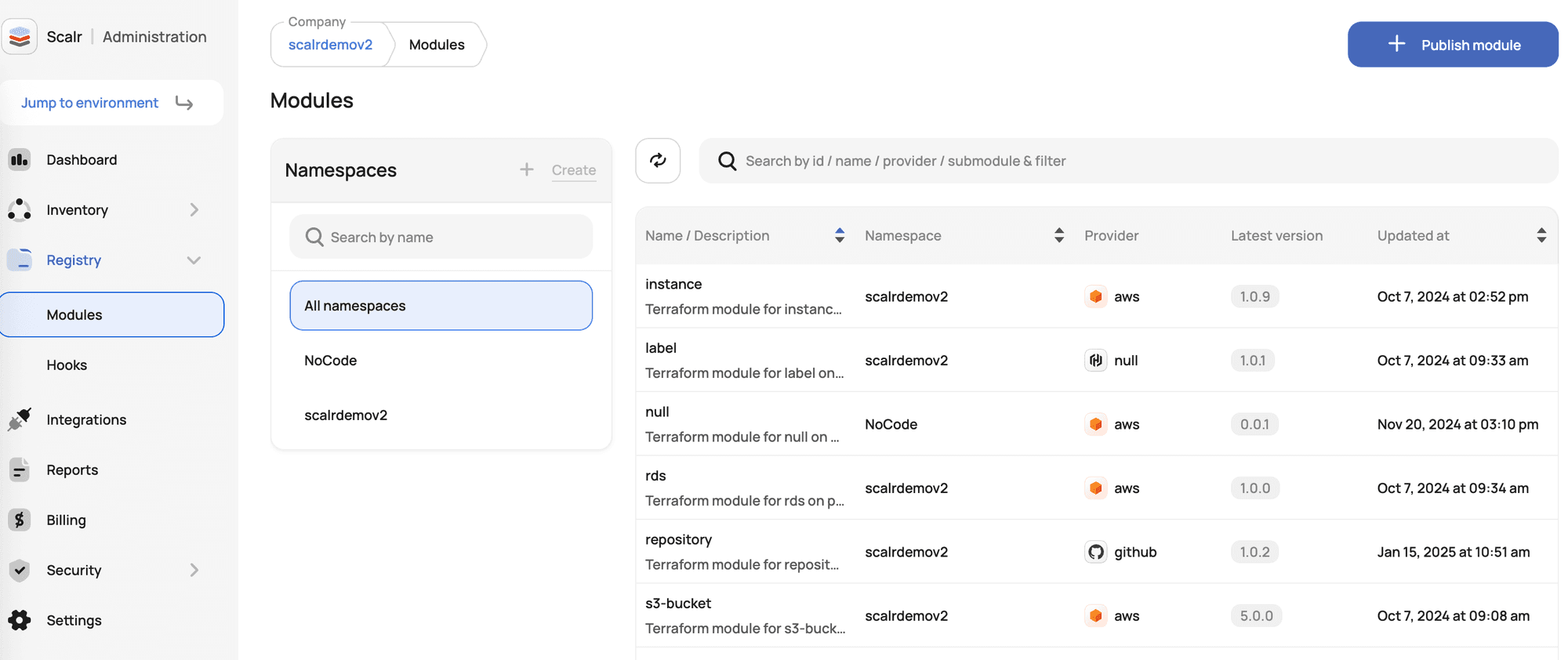
Terraform Modules Explained
- New Feature: Private Module Registry Namespaces
- Top 10 Most Popular Terraform Modules [2026]
- Dependabot for Terraform Modules: The Complete Setup Guide
- Use local execution mode for free with Scalr
- Scaling Terraform Modules
- Scalr offers a free private module registry
- Terraform Modules - Define, Enforce, Report
- Don't Build a Service Catalog
- Getting Started with Terraform Modules
- Terraform Credential Helper With Scalr
- New Feature: Deploy Terraform Modules From A Service Catalog