

Article · part of a guide
New Feature: Private Module Registry Namespaces
Private module registry namespaces let you organize Terraform and OpenTofu modules more easily and choose which environments to share them with.
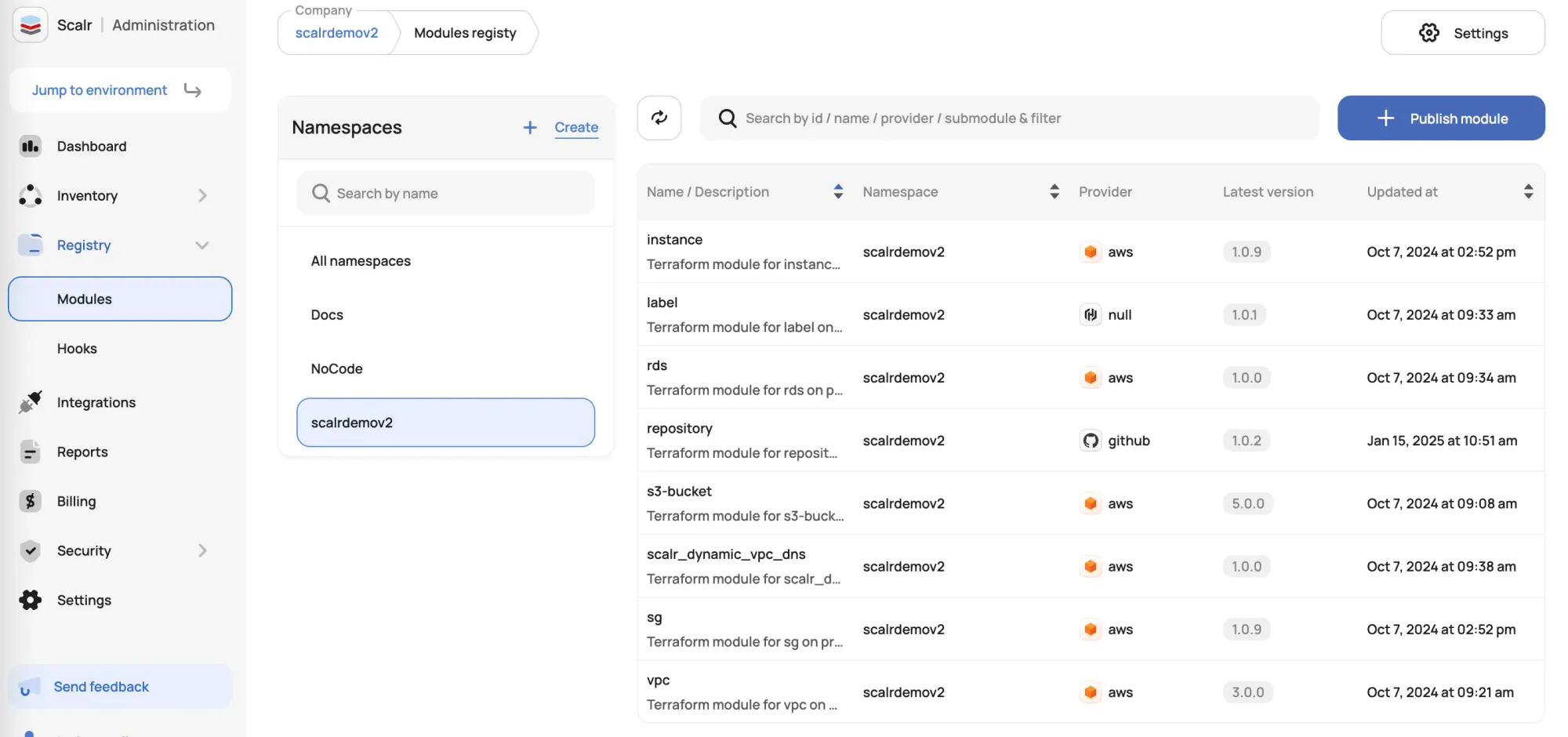
Scalr has long had a private module registry for standardizing how teams consume Terraform and OpenTofu modules. Until now, a registry lived either at the account scope or inside a single environment. That worked, but it gave you little control over how modules were grouped and who could see them. Module namespaces fix that.
What are Module Registry Namespaces?
A namespace is a top-level registry for your modules inside a Scalr account. It gives you a place to group modules however your organization is structured, whether that's by team, by project, or by some other line you draw. You're no longer stuck creating registries only at the account scope or inside a single environment. You create a namespace and assign it to the whole account or to a set of environments you pick.
What's Different from the Old Module Registry Concept?
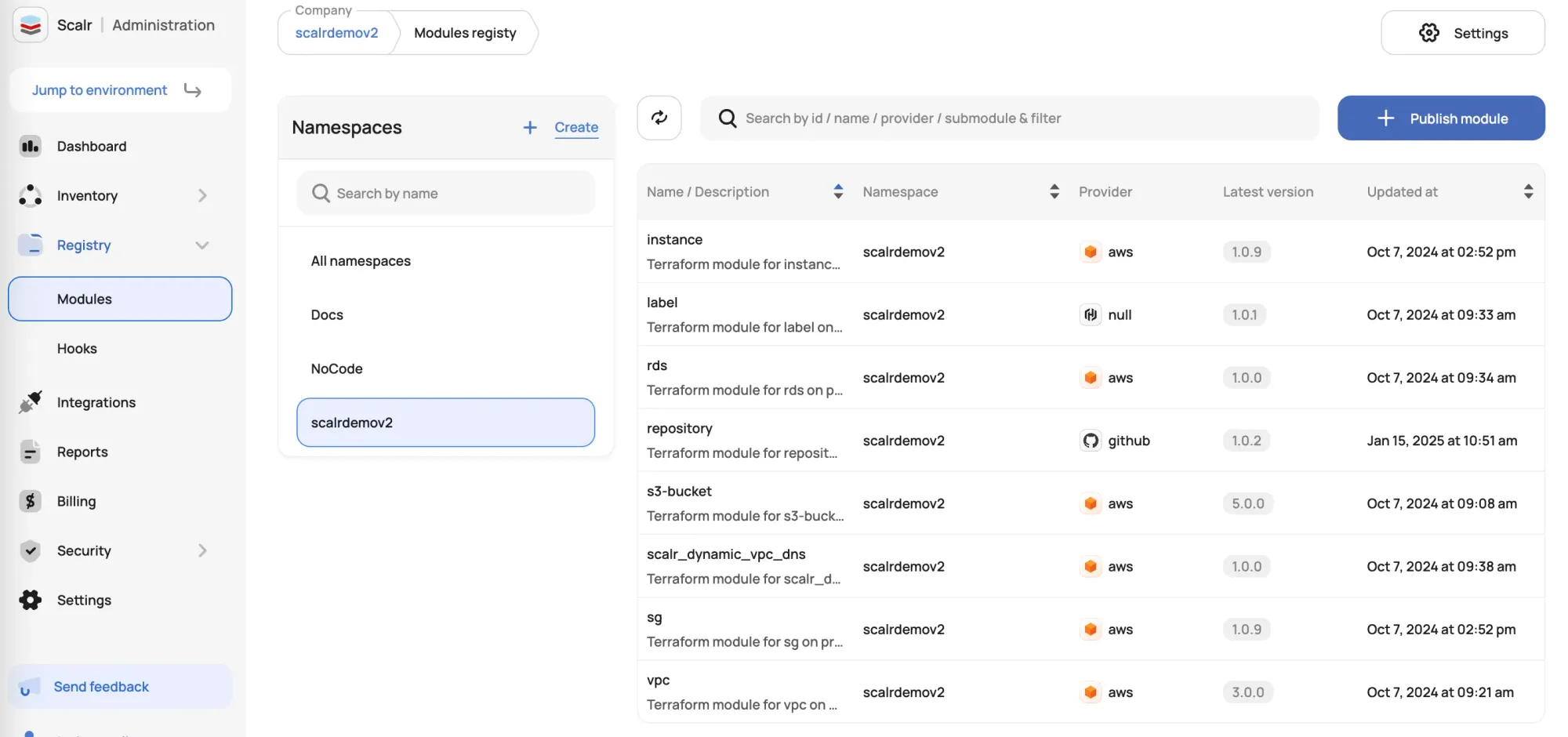
Previously, modules could only be published directly to either the account scope (making them available to all environments and workspaces) or within a specific environment scope (limiting them to that environment). Larger organizations with more complex structures needed more flexibility than that.
With namespaces, you now get the following:
- Centralized Namespace Creation: Namespaces are now only created at the account scope. This establishes a clear, top-level organizational layer for all your modules.
- Flexible Sharing, Not Just Scope: Instead of a module being strictly account-wide or environment-specific by its creation location, a namespace owner can now choose to share the namespace with all environments or select environments. That gives you far more granular control over module visibility and access.
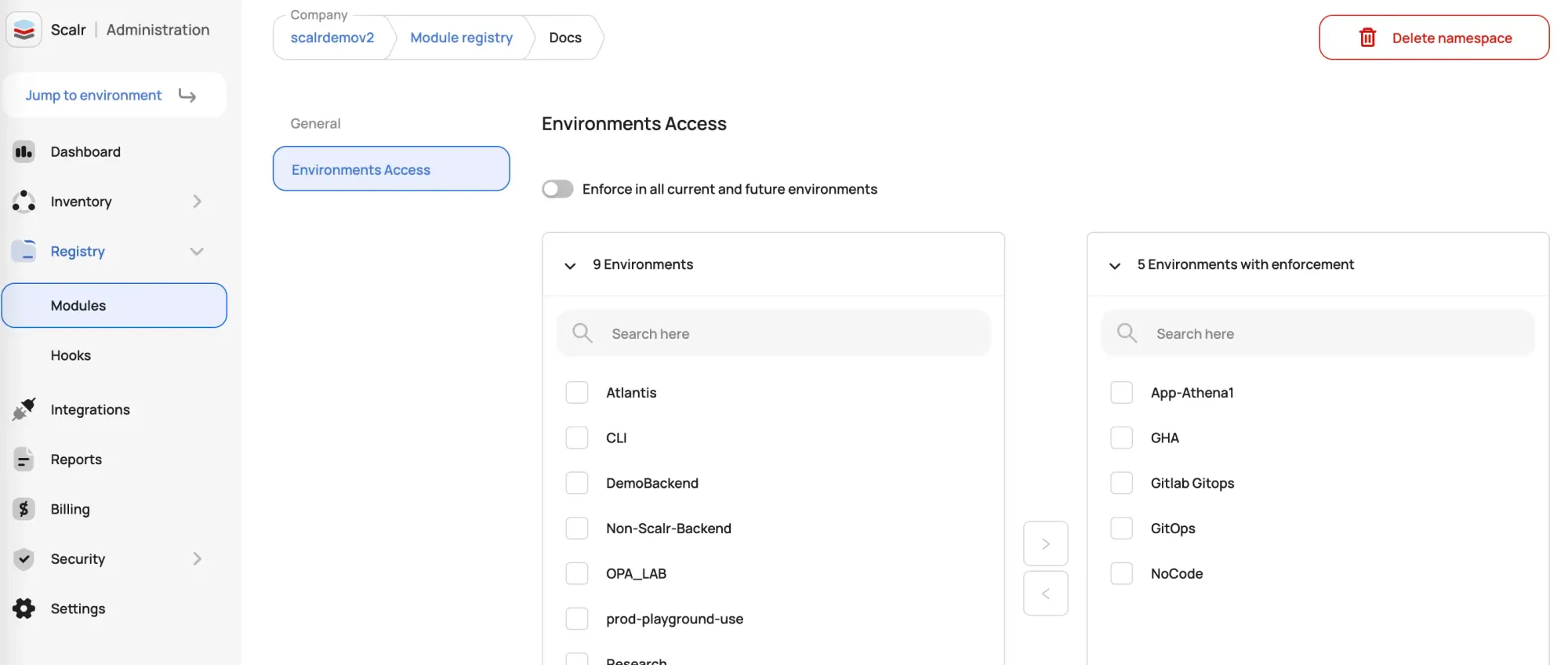
- Namespace Ownership: Optionally, namespaces can have team ownership assigned to them, and only that team will be able to manage them.
Existing Module Registries
All your existing module URLs remain fully functional after the migration to namespaces. Any existing module calls using the previous account or environment scope will continue to work without changes. Your current IaC workflows won't be disrupted.
Get Started Today!
Module registry namespaces are available now in all Scalr accounts. If you manage a lot of modules, it's worth setting up a namespace or two and seeing how the grouping works for your teams.
For steps on how to create and manage namespaces, see our updated documentation: https://docs.scalr.io/docs/private-module-registry
Sign up for a free account to try it.
Frequently asked questions
What are module registry namespaces in Scalr?
A namespace is a top-level registry for Terraform and OpenTofu modules inside a Scalr account. It lets you group modules by team, project, or any other line your organization draws, and share each namespace with the whole account or with a set of environments you pick.
How are namespaces different from Scalr's old module registry scopes?
Previously modules were published either at the account scope, making them visible to all environments, or inside a single environment. Namespaces are created only at the account scope and then shared with all or selected environments, which gives more granular control over module visibility. Namespaces can also have team ownership, so only that team can manage them.
Do existing Scalr module URLs break after moving to namespaces?
No. All existing module URLs remain fully functional after the migration to namespaces, and module calls that use the previous account or environment scope keep working without changes, so current IaC workflows are not disrupted.
Which Scalr accounts have access to module registry namespaces?
Module registry namespaces are available in all Scalr accounts. Steps for creating and managing namespaces are covered in the Scalr private module registry documentation.
About the author

director of platform engineering at Scalr
Ryan Fee is the director of platform engineering at Scalr, with over 15 years of experience improving infrastructure experiences at companies large and small.
Part of this guide
13 sheets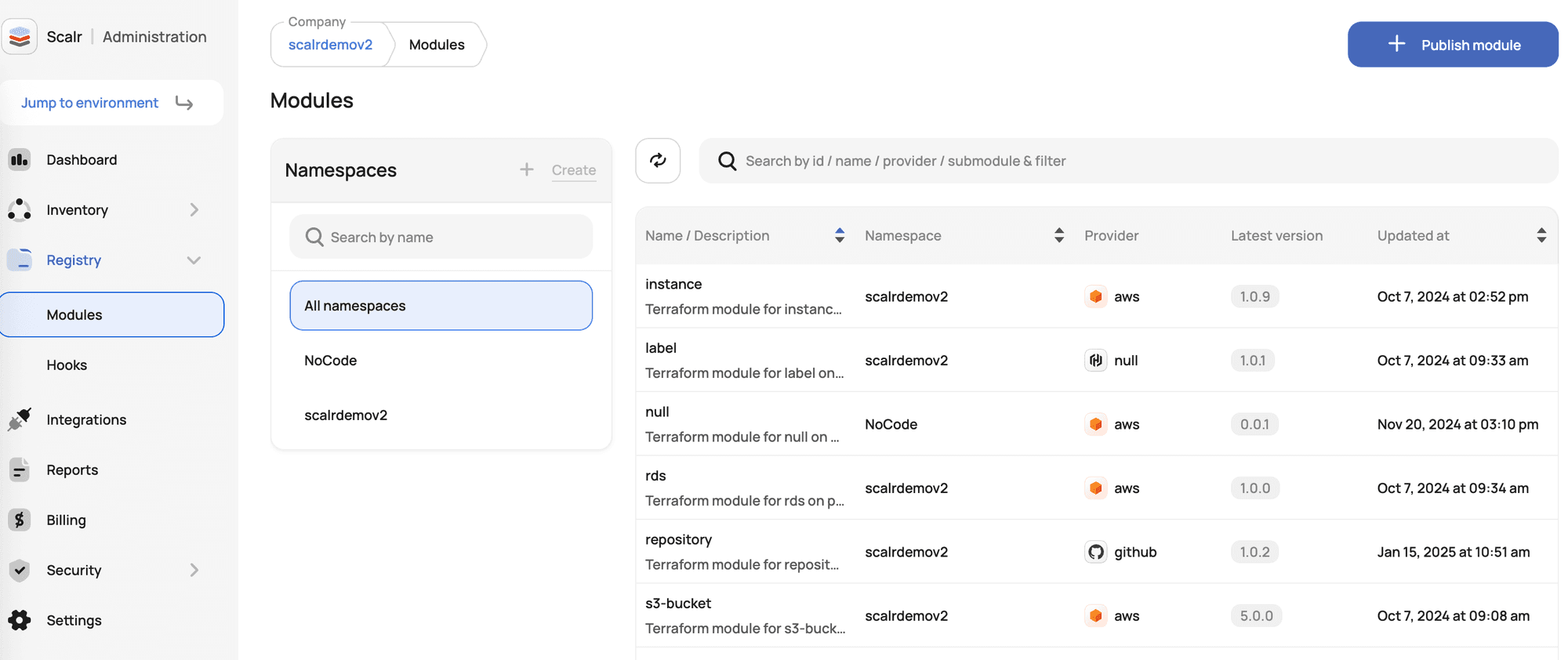
Terraform Modules Explained
- Terraform Registry: Public vs Private Module Registries Explained
- Top 10 Most Popular Terraform Modules [2026]
- Dependabot for Terraform Modules: The Complete Setup Guide
- Use local execution mode for free with Scalr
- Scaling Terraform Modules
- Scalr offers a free private module registry
- Terraform Modules - Define, Enforce, Report
- Don't Build a Service Catalog
- Getting Started with Terraform Modules
- Terraform Credential Helper With Scalr
- New Feature: Deploy Terraform Modules From A Service Catalog