

3 ways to use Terraform Module and Provider Reports
Find out how to use Module and Provider reports to increase your productivity.

Good reporting cuts the time it takes to find the information behind a decision, which leaves you with a cleaner, more compliant Terraform setup. Now that you've removed older versions of Terraform with the versions report, the next thing to understand is which modules and providers are actually being used across your organization.
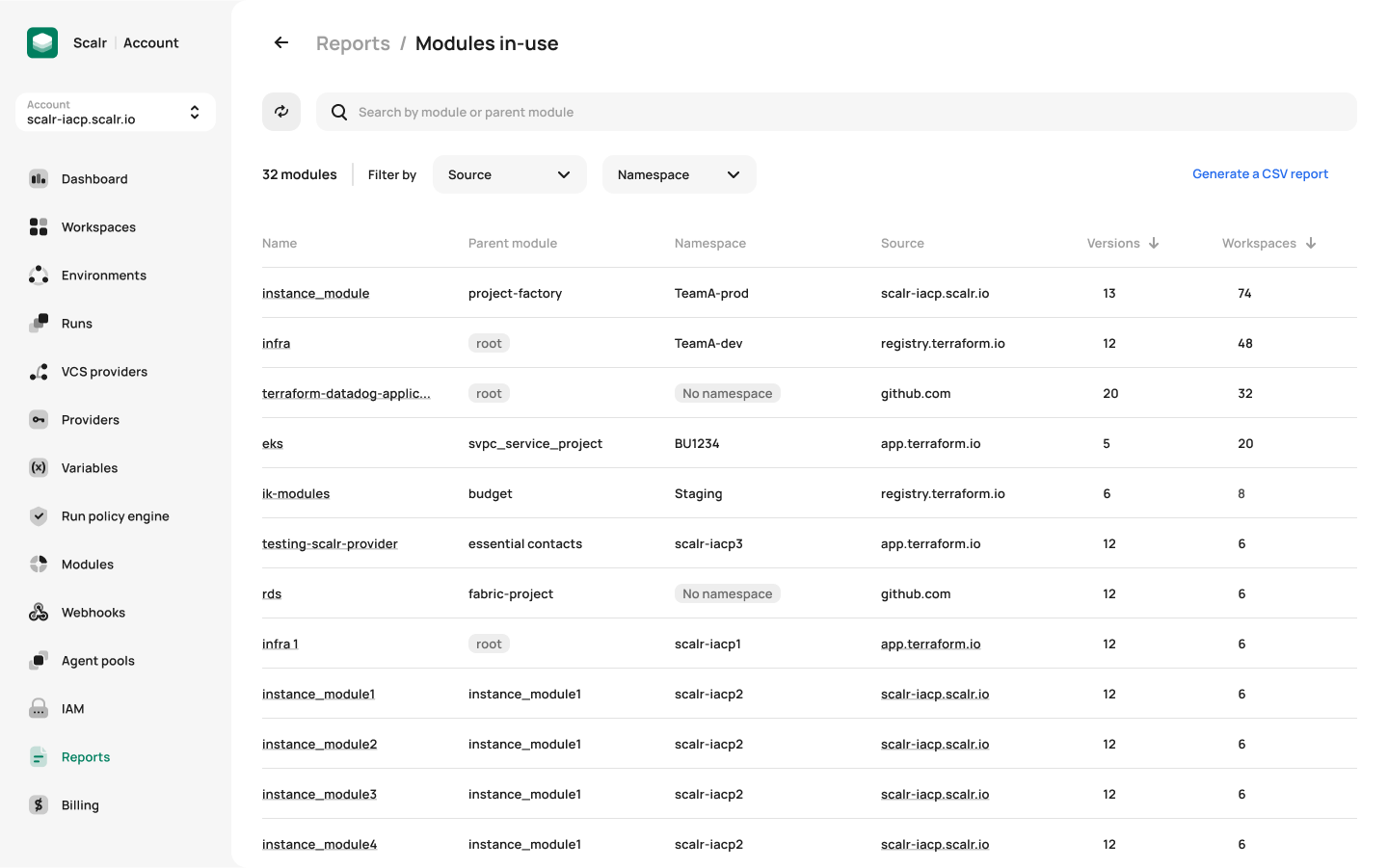
Example of the Module Report
Depending on the scale you're operating at, you've either already hit problems that reporting would have caught, or you're wondering why you'd need reports at all. Here's where they pay off:
- Ensure compliance: Depending on your industry and regulatory environment, you may be required to keep track of changes to your infrastructure for compliance purposes. Knowing exactly what modules and providers are used, the versions that are used, the source they are pulled from and drilling into the workspaces that depend on them will be critical to ensuring compliance.
- Troubleshoot issues: Things break. An easy fix might be identifying that the DevOps team who reported the issue is using an out-of-date module that your platform team no longer supports.
- Make decisions faster. Know how and when your modules and providers are being used. Know which modules or providers you need to prioritize and those that are barely being used. Know who is making changes and when. Know how many versions you actually need to support or deprecate.
All reports are actionable and allow you to drill down into individual workspaces. Log in or Sign Up to try it now or learn more below!
About the author
Ryan Feedirector of platform engineering at Scalr
Ryan Fee is the director of platform engineering at Scalr, with over 15 years of experience improving infrastructure experiences at companies large and small.Part of
Terraform Modules Explained
A comprehensive guide to understanding, creating, and managing Terraform modules for scalable Infrastructure as Code.Ryan Fee
March 31, 2026More on this topic
Terraform Registry: Public vs Private Module Registries Explained
New Feature: Private Module Registry Namespaces
Top 10 Most Popular Terraform Modules [2026]
Maintaining Terraform Module Health with Dependabot and Scalr
Use local execution mode for free with Scalr
Scaling Terraform Modules
Scalr offers a free private module registry
Terraform Modules - Define, Enforce, Report
Don't Build a Service Catalog
Getting Started with Terraform Modules
Terraform Credential Helper With Scalr
New Feature: Deploy Terraform Modules From A Service Catalog
Terraform Module Registry – Hierarchical Inheritance