

Article
Product Updates April 2025: Flexible Storage Options, Federation, and GitOps Workflows
Scalr’s April 2025 release adds flexible storage backends, cross-org federation, and GitOps workflow boosts for faster, safer Terraform automation.
In April we shipped a batch of features around how teams manage state and run workflows. A few of them open up operations across environments, and others extend what you can do with policies and GitOps.
What Are Storage Profiles?
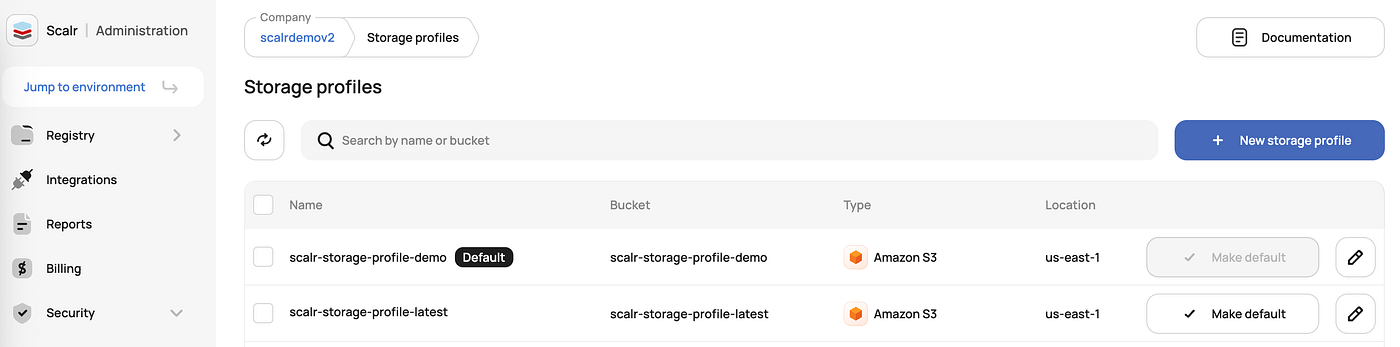
Storage Profiles now support storing state, logs, and configuration files either in Scalr or in customer-managed buckets across AWS, Azure, or GCP. Administrators get more control over data residency, compliance, and cost management, and keep Scalr’s automation and governance. More information can be found here.
How Do Cross-Environment Run Triggers and State Sharing Work?
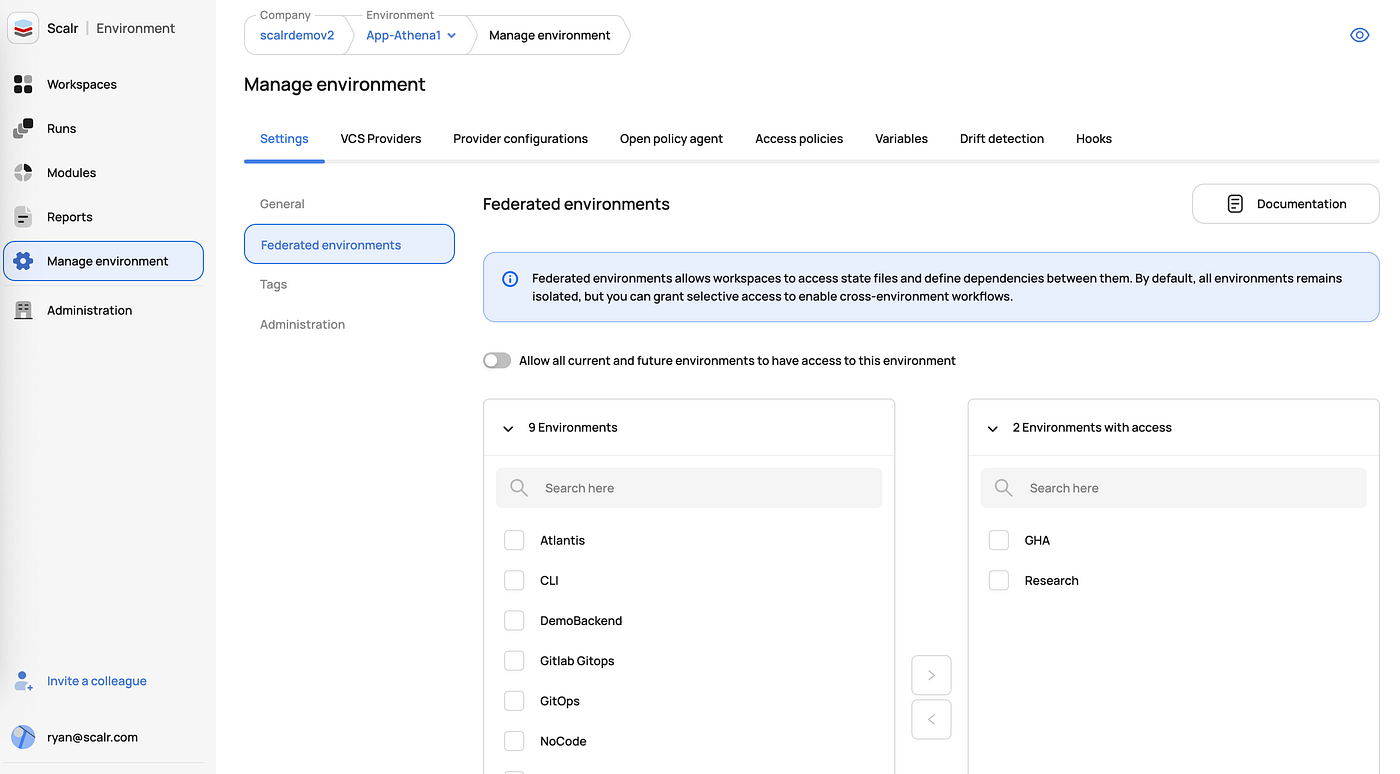
We introduced federated environment access, making it possible for workspaces in different environments to share state and trigger runs across boundaries. Many organizations separate workspaces into different environments for governance or team structure reasons. This update makes it easier to automate workflows across those environments without manual coordination. More information can be found here.
What Does the New Pull Request Dashboard Show?
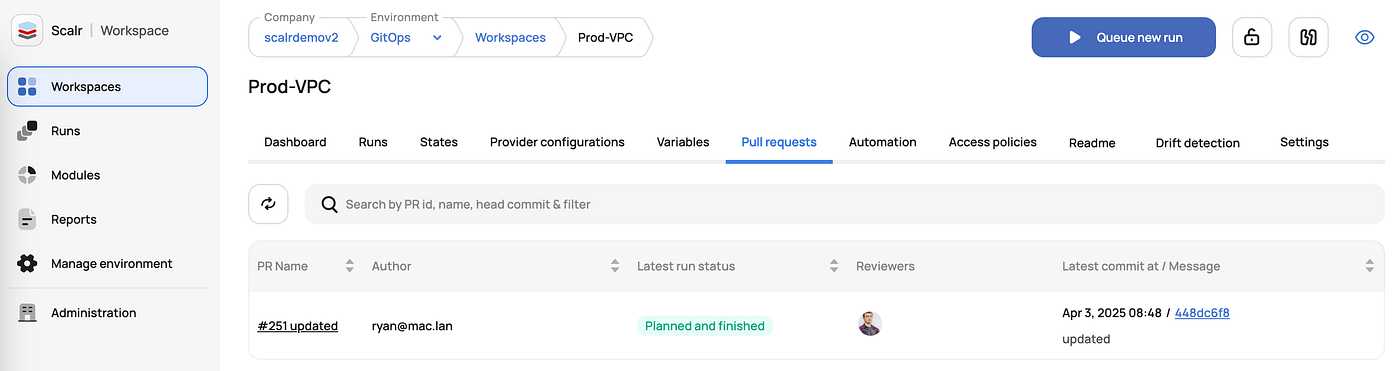
A new dashboard now displays all pull requests linked to a workspace, along with their statuses. Teams can see pending infrastructure changes in one place instead of switching between tools to review them.
Can You Set Expiration Dates on API Tokens?
Administrators can now set expiration dates for API tokens. That lets you enforce token rotation without adding a manual process.
What Does the New OPA Merge Error Attribute Do?
We added a new merge_error attribute to the policy input, capturing merge blocker statuses (like ‘dirty’, ‘blocked’, or ‘behind’) from GitHub pull requests. Teams can use it to write policies that stop runs from executing against pull requests in a blocked or unstable state. An example OPA policy can be found here.
To try these features, sign up and run Terraform or OpenTofu on Scalr at your organization. The pricing page has the plans and a run calculator.
About the author

director of platform engineering at Scalr
Ryan Fee is the director of platform engineering at Scalr, with over 15 years of experience improving infrastructure experiences at companies large and small.